
Culantro vs Cilantro: Differences, Uses and Ordering Tips
Are culantro and cilantro the same herb?
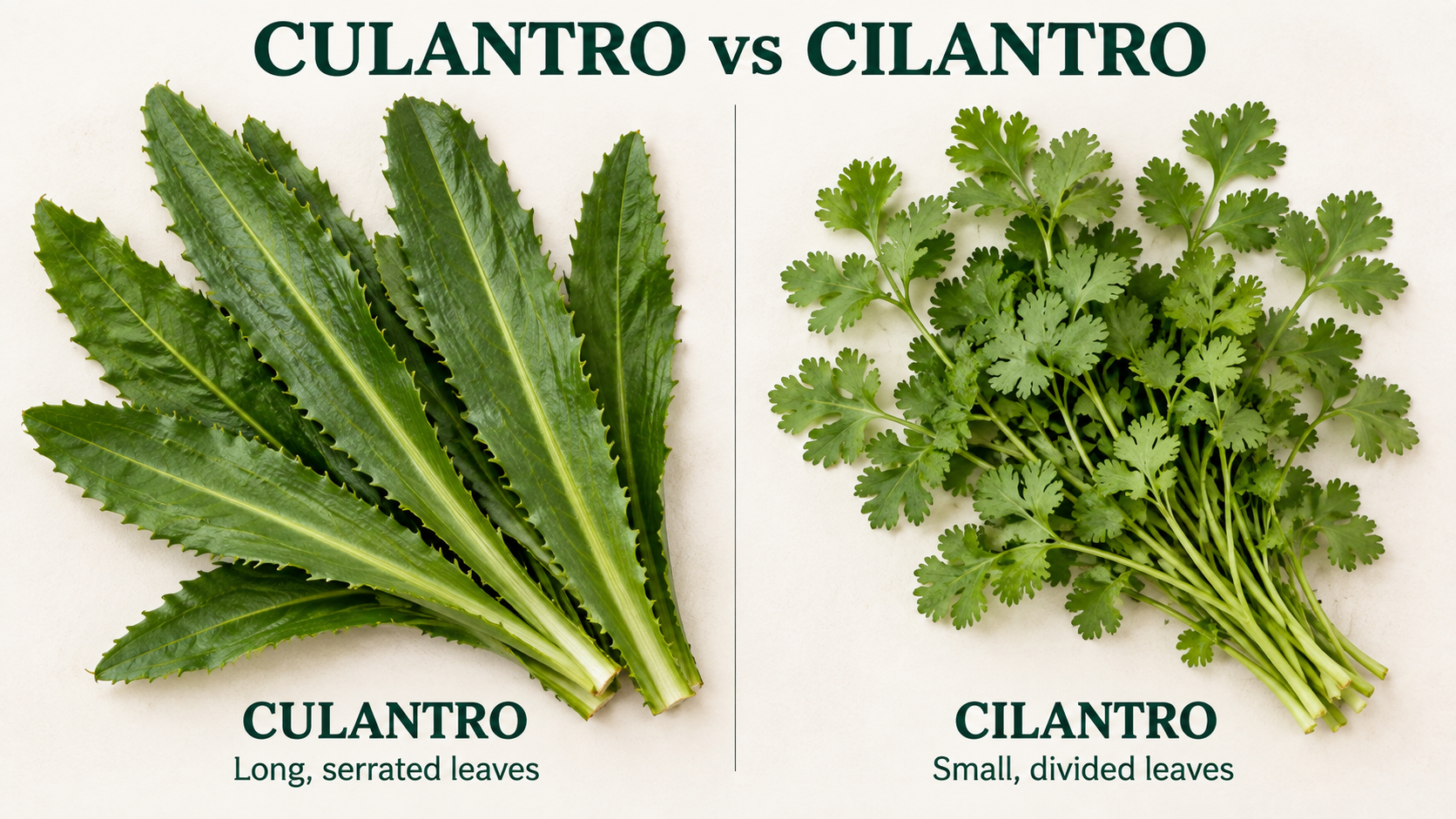
No. Culantro and cilantro are different plants with similar aromas but different leaves and flavor intensity. Culantro has long, serrated leaves and a stronger flavor; cilantro has smaller, divided leaves. A purchase order should name the intended herb explicitly so receiving staff do not treat one as a spelling variation of the other.
ProduceXpress lists both products: culantro in a 1 lb bag and cilantro in a 60-count bunched box. Choosing between them means checking the recipe as well as the pack.
What is the difference between culantro and cilantro?
The quickest distinction is the leaf shape, followed by the flavor and the preparation the dish requires.
| Detail | Culantro | Cilantro |
|---|---|---|
| Botanical name | Eryngium foetidum | Coriandrum sativum |
| Leaf appearance | Long leaves with toothed edges | Divided, feathery-looking leaves |
| Flavor comparison | Similar aroma to cilantro, with greater intensity | A fresh herbal character commonly used in salsa and finishing preparations |
| Recipe identification | Also called recao or saw leaf herb | Leaves of the plant whose seeds are sold as coriander |
| ProduceXpress format | 1 lb bag | 60-count bunched box |
The botanical and culinary distinctions are described by University of Florida IFAS Extension in its culantro guide and cilantro guide. Pack details above reflect the ProduceXpress listings checked September 8, 2026.
Is recao the same as culantro?
Recao is a name for culantro used in Puerto Rico, according to UF/IFAS. It is a useful term to recognize when a chef's recipe uses a different name from the supplier's catalog.
Put both names on an internal purchasing specification if needed: “culantro / recao.” Then include the product code or catalog link and pack size. That gives the chef, buyer and receiving team one shared reference.
Do the same when a recipe says coriander. Confirm whether it means fresh cilantro leaves or the seed spice before ordering; the names alone may not make the intended ingredient clear.
When should a kitchen choose culantro?
Choose culantro when the recipe calls for it or a tested preparation needs its particular flavor and leaf texture. UF/IFAS identifies it as an ingredient in sofrito and recommends fine chopping because the whole leaves can be tough.
For a restaurant, turn that into a repeatable preparation standard. Specify the amount by weight, the trimming step and the chop size. Taste the completed recipe at its intended serving temperature before approving the batch sheet.
A minced herb mixed through a preparation and a whole leaf placed on top of a dish have different requirements. Make the presentation decision during menu testing so the line cook is not deciding what to do with an unfamiliar leaf during service.
Can you substitute culantro for cilantro?
You can test a substitution in some dishes, but do not assume an equal-volume or equal-weight swap will produce the same result. The different intensity and texture can change the finished dish.
Use a small controlled trial:
- Prepare a sample of the recipe with the usual herb as a reference.
- Make a second sample using a smaller measured amount of the proposed substitute.
- Taste both in the completed dish, including its normal sauce and accompaniments.
- Adjust the amount and chop size, then record the approved result.
- Update the prep sheet and ingredient information before serving the changed recipe.
This is a tasting method, not a universal substitution ratio. The appropriate quantity depends on the dish, the batch and the chef's target flavor. If the intended herb is essential to the menu item, confirm availability instead of approving an untested replacement.
How do the ProduceXpress pack sizes affect an order?
The culantro listing specifies weight, while the cilantro listing specifies a count of bunches. A 60-count cilantro box does not tell you the usable weight of each bunch or provide a direct comparison with a 1 lb culantro bag.
For culantro, calculate the recipe's required usable weight and account for the trimming you observe in a sample. For cilantro, measure the usable yield of representative bunches before converting a weight-based recipe into a box order.
Give the buyer a complete line item. For example, “cilantro, 60-count bunched box” is clearer than “one box of herbs.” Put the approved substitution policy beside it: ask the chef before changing the herb or pack format.
How should staff receive and prepare these herbs?
Check that the product identity, pack and condition match the order, then follow the supplier's storage instructions and the kitchen's preparation procedure.
Label containers with the full herb name so similar-sounding ingredients remain distinct after unpacking. Keep the recipe specification available at the prep station, and separate the amount needed for the next batch from the remaining stock.
For herbs that need washing, University of Minnesota Extension recommends cool running water and gentle handling; prolonged soaking is discouraged. Follow washed or ready-to-eat labeling where applicable. Use clean tools and keep the preparation area separate from raw animal foods.
Where can restaurants buy culantro and cilantro?
Both are listed in the ProduceXpress catalog: culantro as a bagged herb and cilantro as a bunched box. Check the live product pages for current availability, pack information and ordering options.
If you are choosing a finishing garnish for the same dish, our microgreens guide and edible flowers guide cover those separate ingredients. Start with the flavor the recipe needs, then choose the garnish that completes the plate.
Product details and linked sources checked September 8, 2026. Follow current product labels and your kitchen's handling procedures.